Blue Archive
Цэнхэр Түүхэн Үйл Явдал
Нүүдэлчдийн Соёл Алга Болох нь ба Эргэн Ирэх Нууц
This project uses cyanotype as both medium and metaphor to explore the fading of Mongolian cultural identity in the face of urbanization. Through video, sound, and handcrafted experimentation, projection space becomes a living archive—where viewers navigate blurred memories and fragmented traditions. The work seeks to reconstruct a sense of identity within what is disappearing.
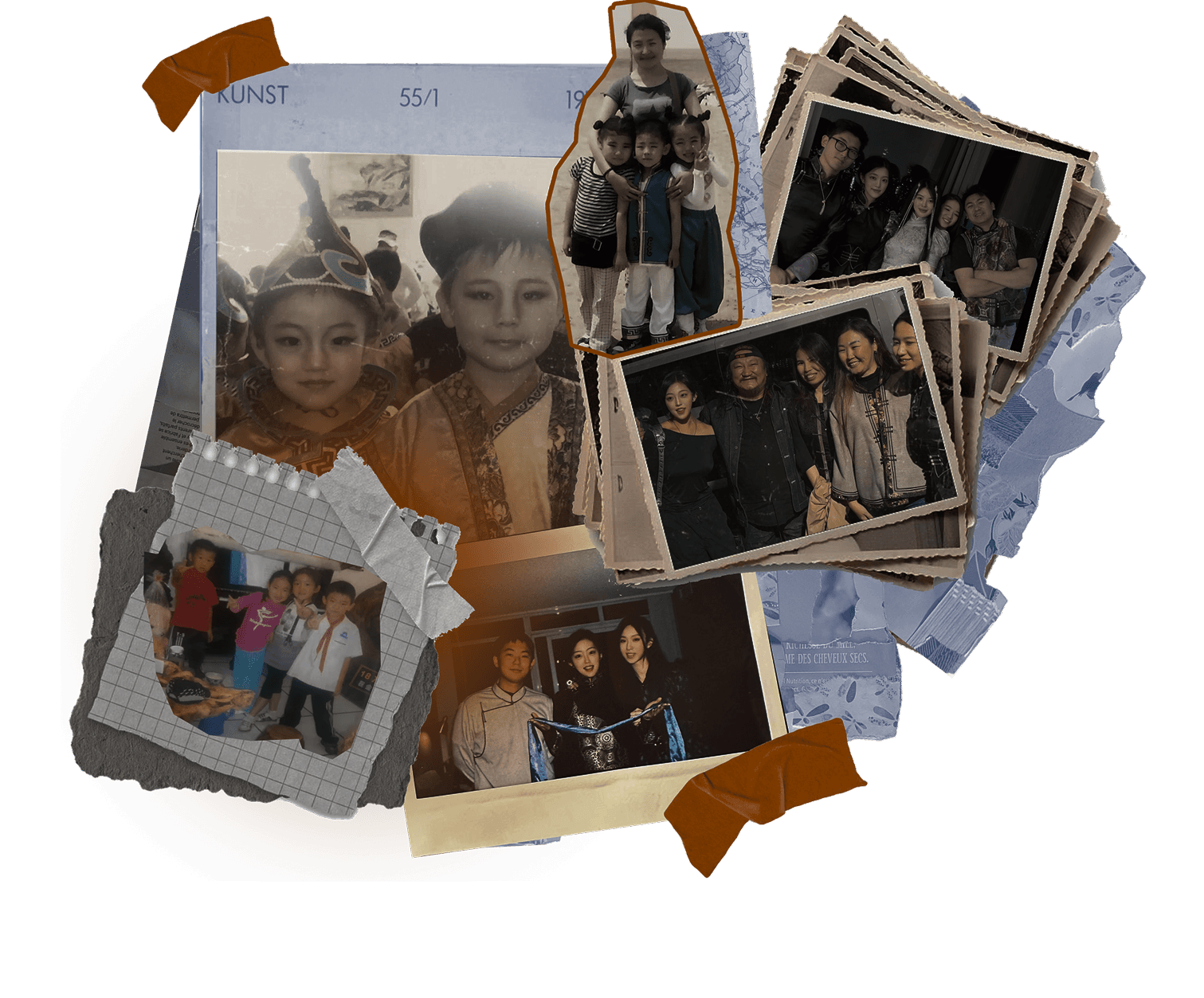
As a Mongolian ethic group who grew up within the memories of grassland culture, I was once surrounded by a language, rhythm, and way of life deeply connected to the land. Yet in my youth, I deliberately distanced myself from these roots—believing that leaving them behind would open the door to a broader, more modern world.
Transitioning from a Mongolian-language education to a Chinese-language system, I gradually erased the traces of my own culture. But as I became fully immersed in modern life, I realized that what I had set aside was not a boundary, but a foundation—something that continued to define me even in absence.
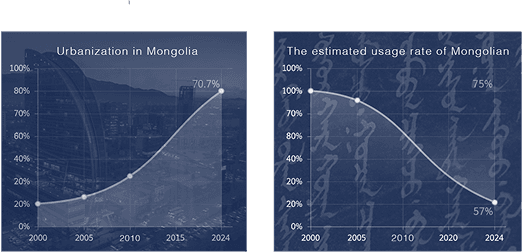
From 2000 to 2024, Inner Mongolia’s urbanization rose from 42.7% to 70.7%, while Mongolian language use fell from about 75% to 57%.
This inverse relationship reflects not coincidence, but the impact of policy, education, and social change. The dual-axis graph visualizes a deeper loss—beyond land, the erosion of language, memory, and identity.
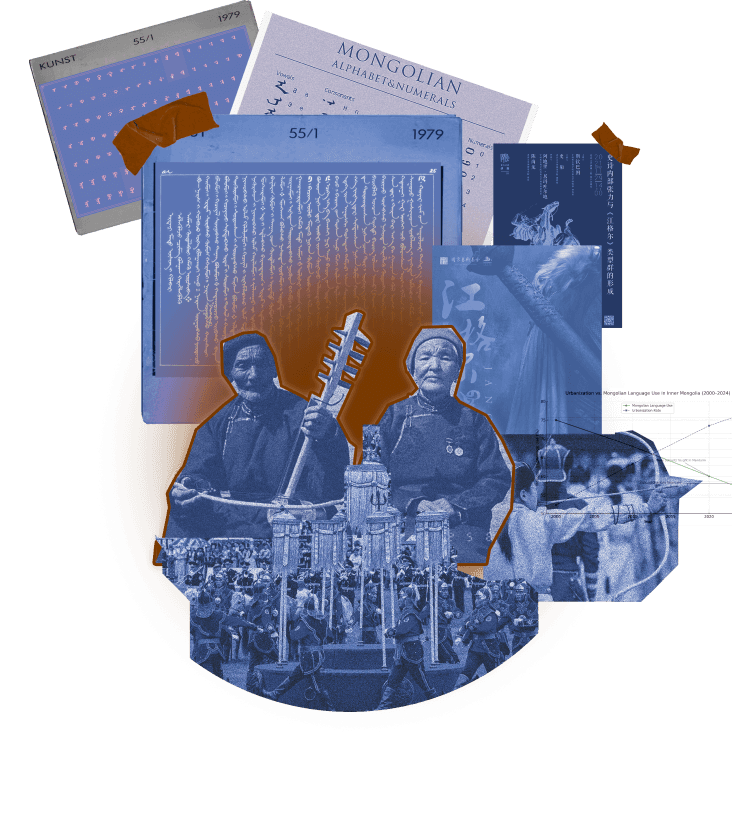
1.Language
Over 90% of urban Mongolian youth use Chinese on social media.
Most can speak Mongolian but cannot write it, due to the lack of mobile input systems.
2. The Epic of Jianggar
Living epic singers average 72 years old.
Oral transmission is fading as performances shift to official and commercial stages.
3. Naadam Festival
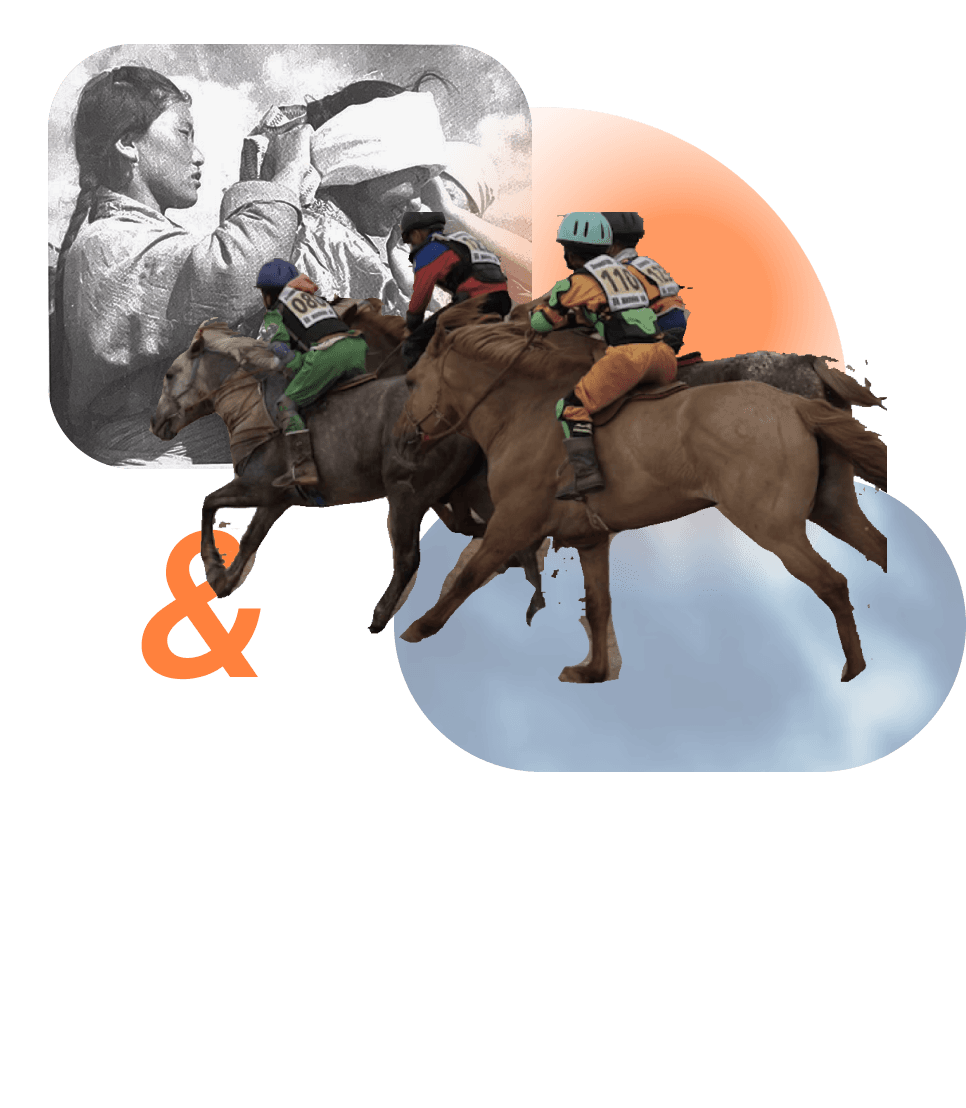
Between 2010 and 2023, Naadam events in some cities dropped from 8 to 2. Horse racing distances shrank from 30 km to 3 km, turning ritual into spectacle.
4. Long Melody Folk Songs
Urban migration has emptied traditional villages. The oral chain of long melody singing is being broken.
This timeline provides an overview of the transition from nomadic living on the steppe to urban life, highlighting the gradual shift from mobility to settlement and urbanization as a foundation for understanding contemporary identity and cultural change.

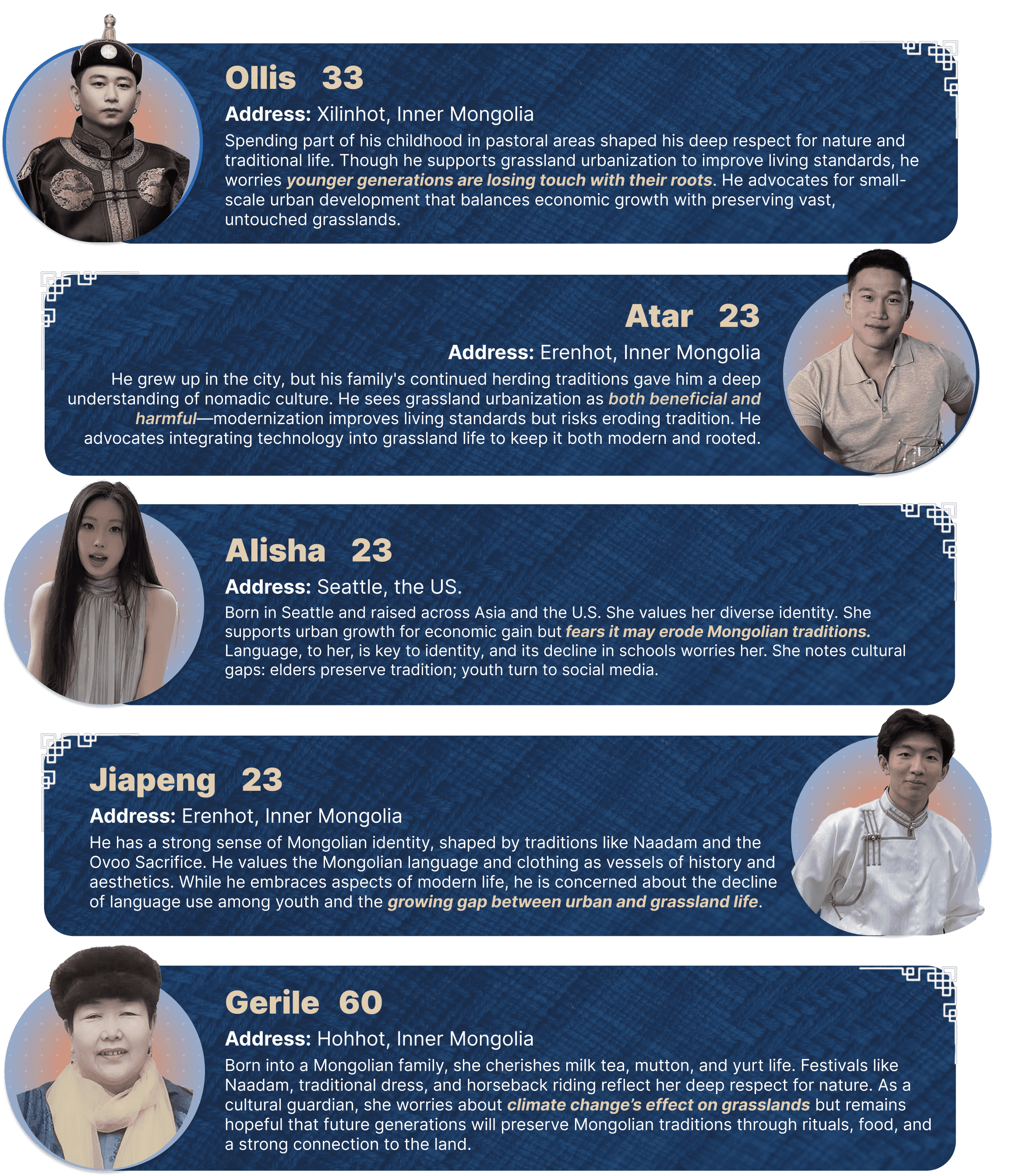
About the Project:
This project investigates the transformation of Mongolian nomadic culture under the forces of urbanization and modernization. Through experimental video and sound-based storytelling centered on personal interviews, it explores how cultural identity is remembered, reshaped, and passed down across generations. The work acts as a time capsule and a reflective space, capturing both continuity and change within Mongolian heritage.
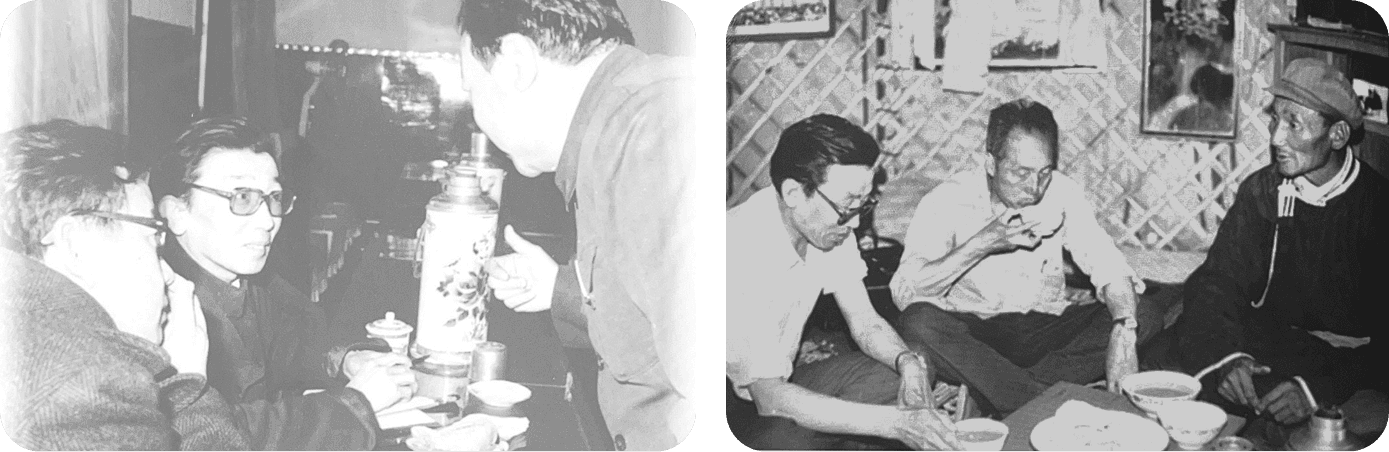
It is also based on my grandfather’s audio, using his voice as the narrative backbone. Expressed through experimental video, it reflects his unique perspective as a journalist and explores the fading of nomadic traditions and the transformation of Mongolian culture in the context of urbanization.
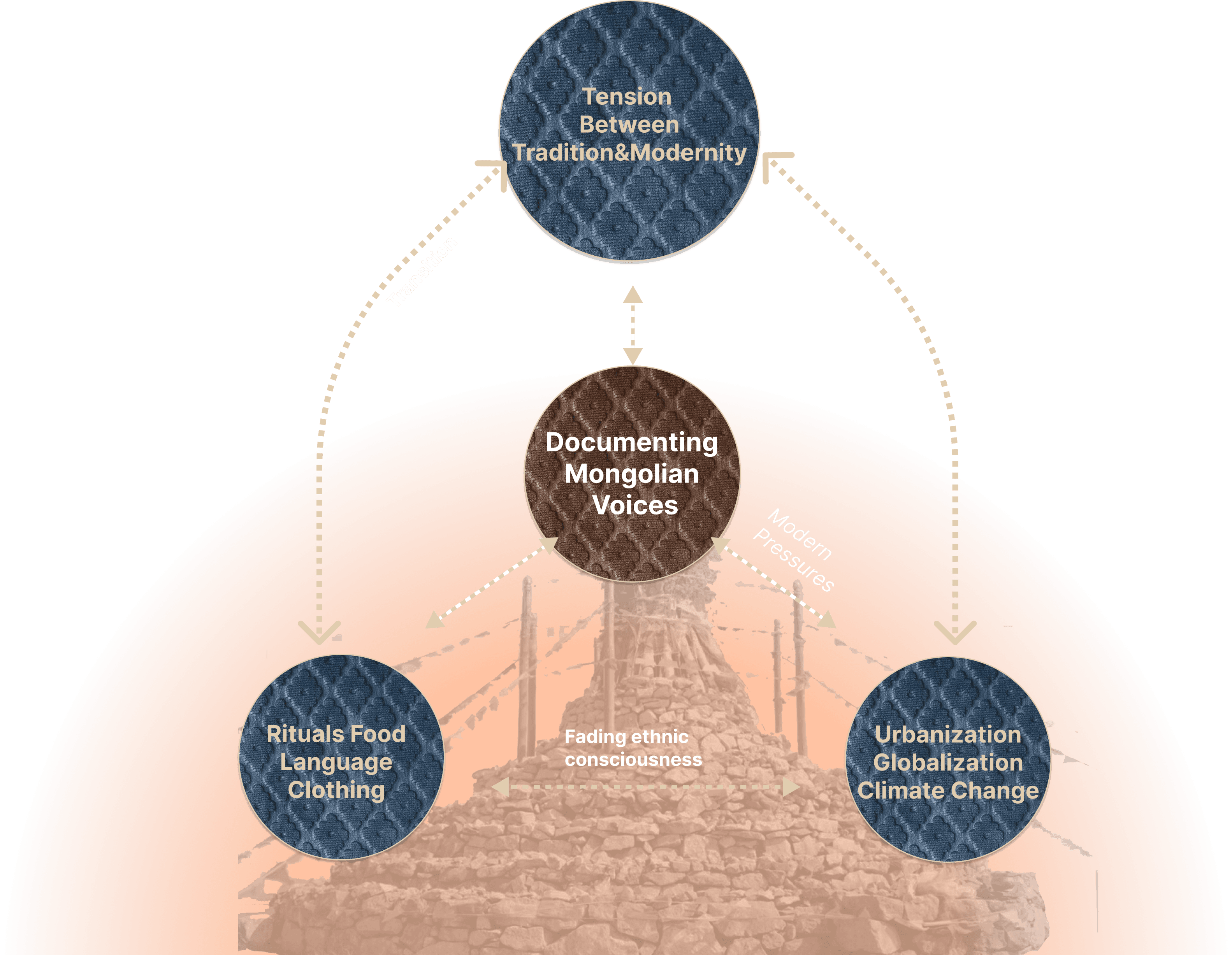
Aim:
The project aims to document and reflect on the lived experiences of Mongolian individuals navigating the tension between traditional nomadic life and modern urban existence. It seeks to preserve disappearing cultural elements—such as language, ritual, and oral history—while also questioning how tradition can evolve through contemporary expression. Ultimately, it encourages dialogue on sustainable cultural transmission in a rapidly changing world.
Why Cyanotype?
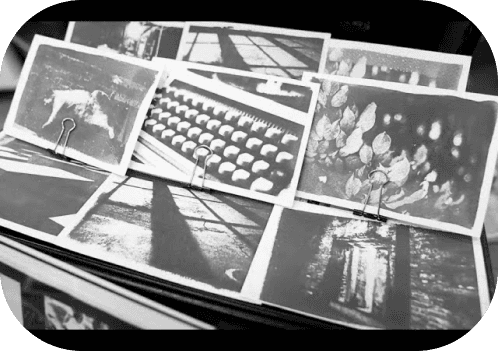
Cyanotype was chosen for its nature as a process of revealing through time and light—mirroring how memory surfaces gradually. Its deep blue tones echo the colors of Mongolian traditional clothing and landscape, while also highlighting the archival and ephemeral qualities of cultural history.
Why Blurring Patterns?
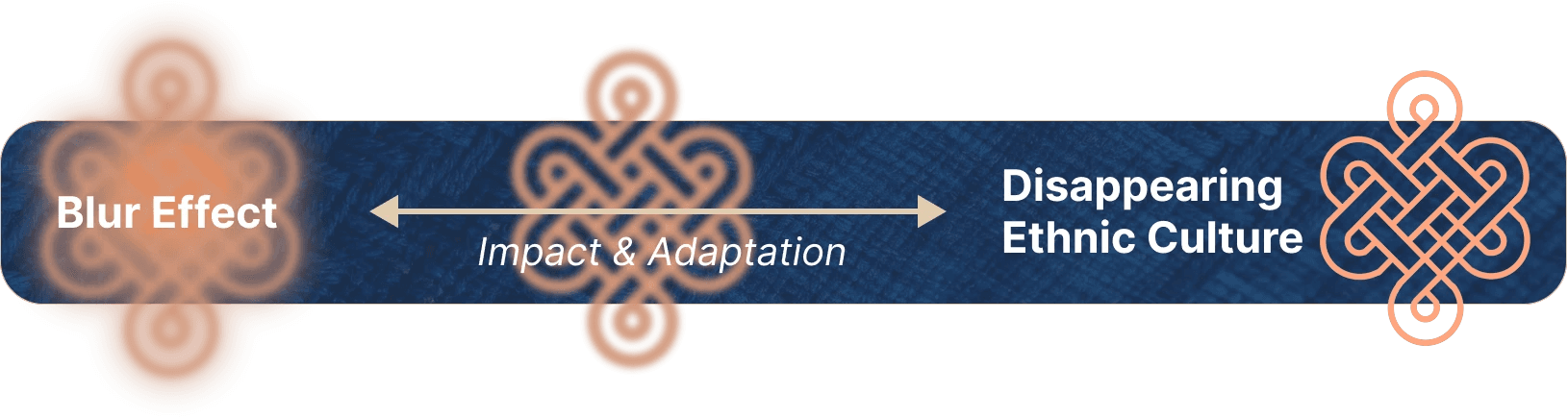
From Clarity to Diminishing Identity

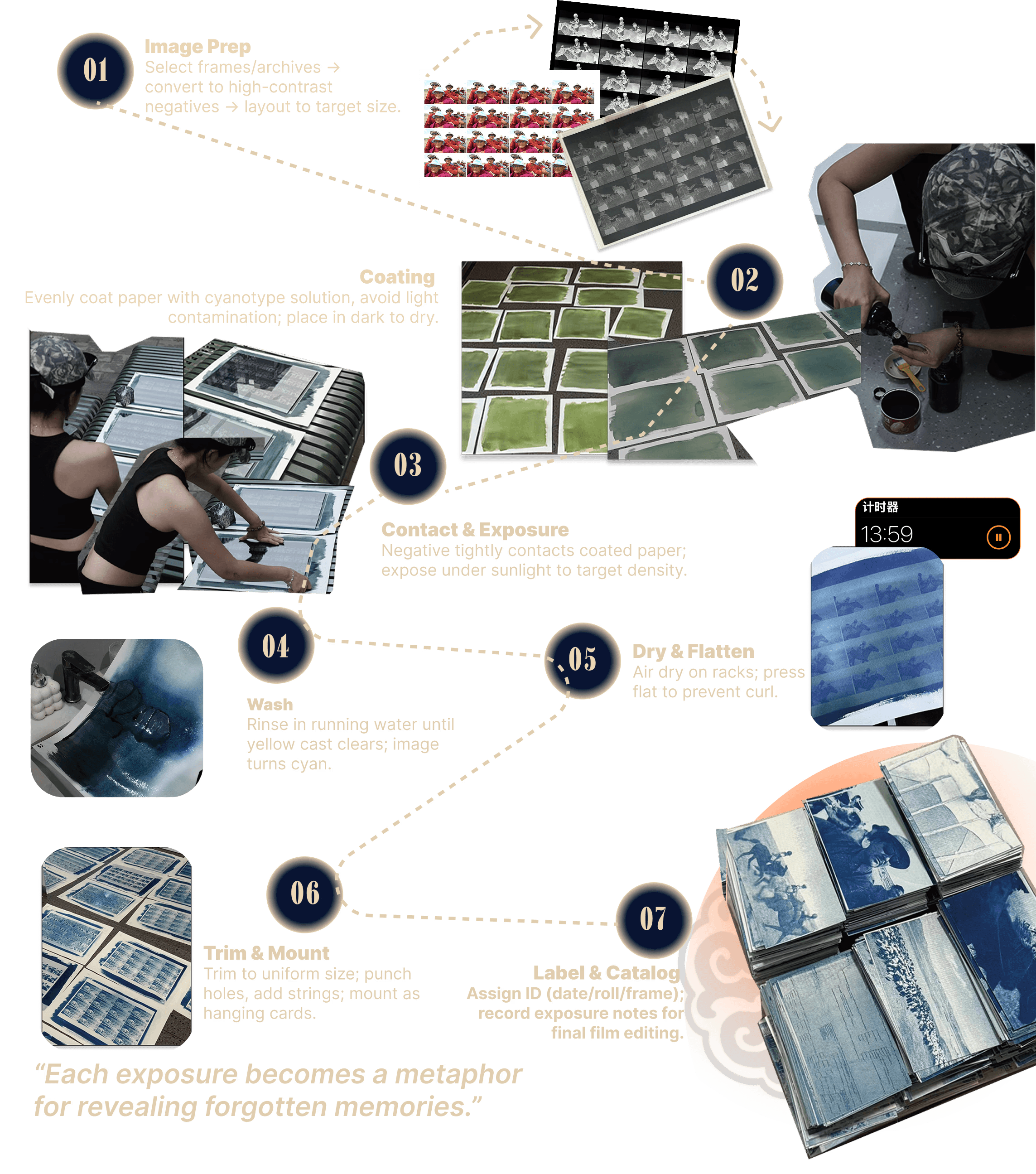
Manual Process
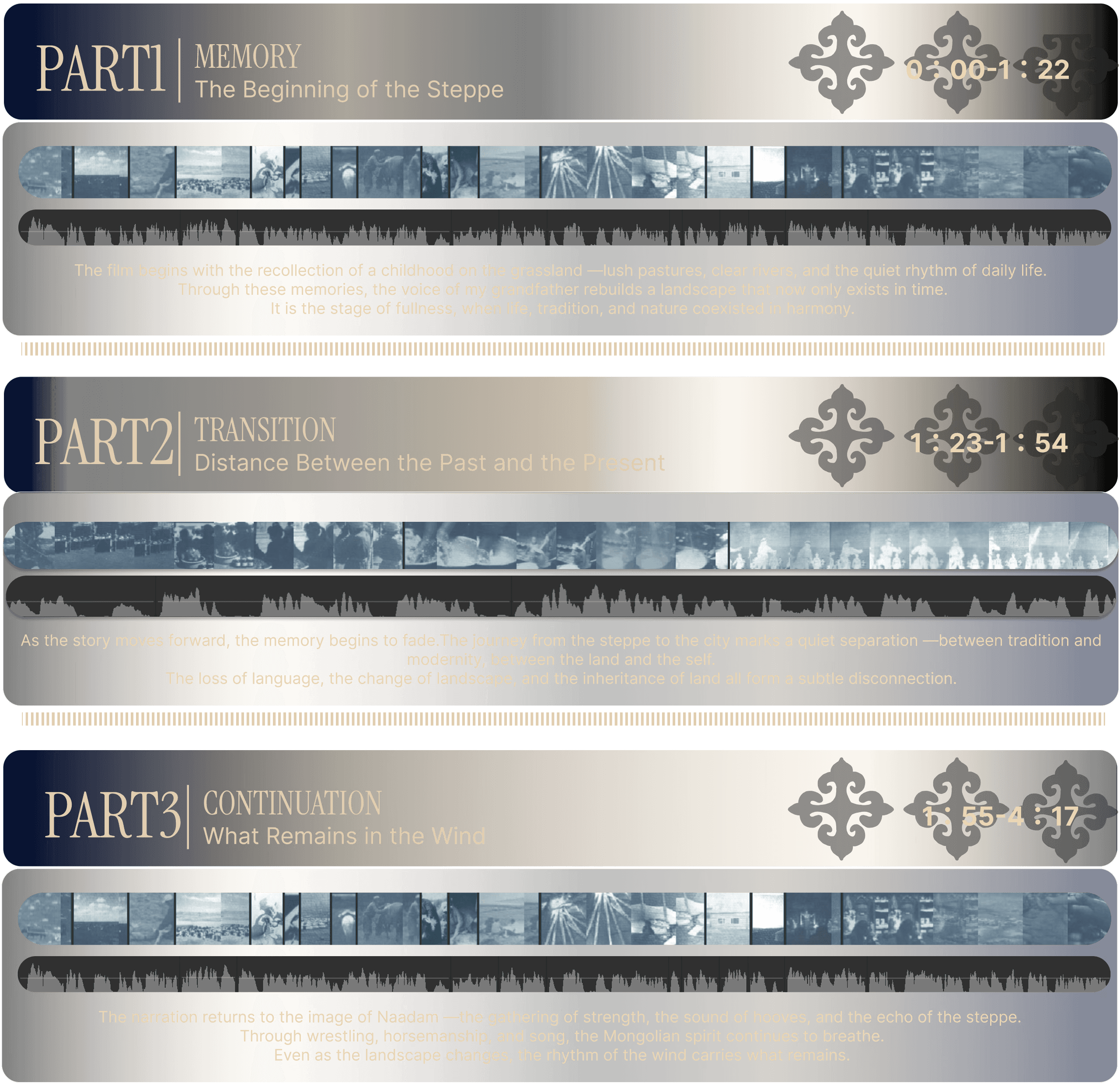
Narrative Structure
The video was first edited digitally, then exported as 12 frames per second to capture motion rhythm.Each frame was printed onto transparent film and exposed using the cyanotype process.Through this method, a moving image was reinterpreted frame by frame into a hand-developed sequence, creating the tactile effect of stop-motion animation.

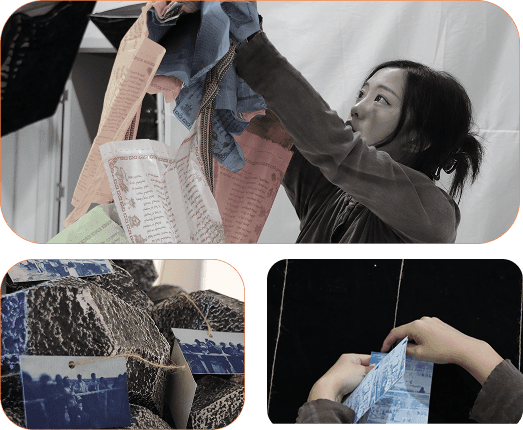
Spatial Installation
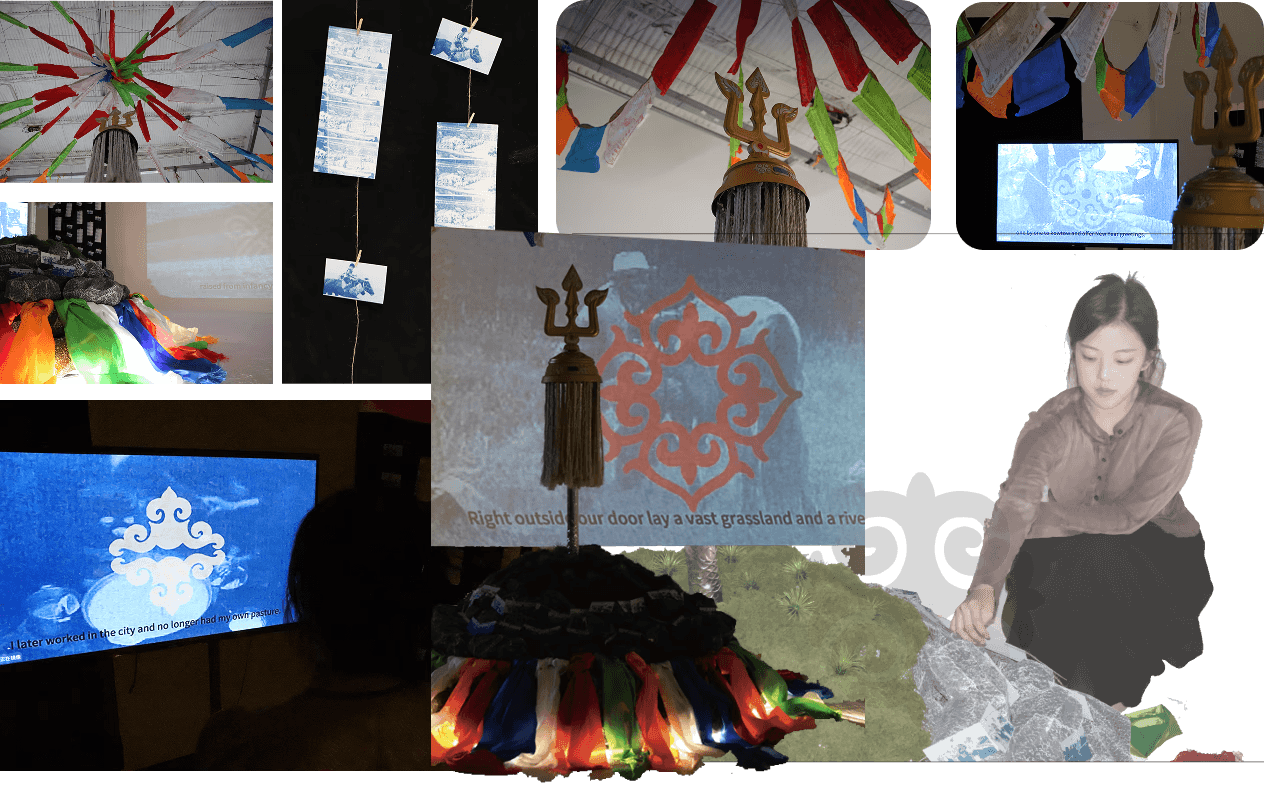
From Film to Space: Translating Memory into Installation
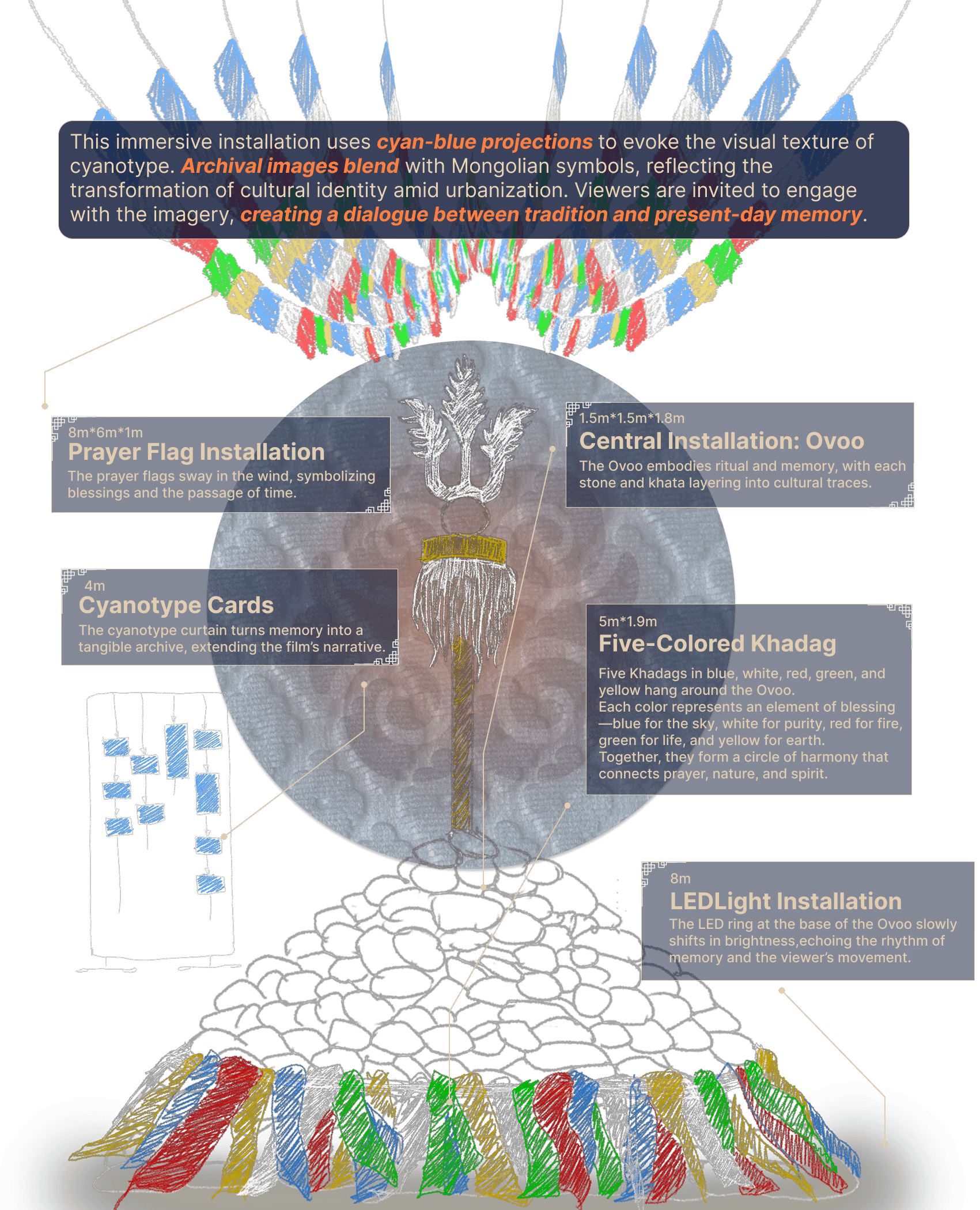
This final installation integrates video projection, cyanotype prints, and ritual objects such as the Ovoo, khadags, and prayer flags. I transforms the documentary into a physical space of reflection — where sound, light, and motion reconstruct memory through participation. Each material carries symbolic meaning: the Ovoo embodies offering, the cyanotype preserves fading memory, and the five-colored khadags connect spiritual and cultural identity.
see also